Things I've actually shipped
Side projects I took from idea to live product: design, code, payments and all.

A travel companion that turns visiting Egypt into a game. Check in at real landmarks, earn XP and rarity badges, complete trivia quests, and listen to narrated audio tours across 24 sites.

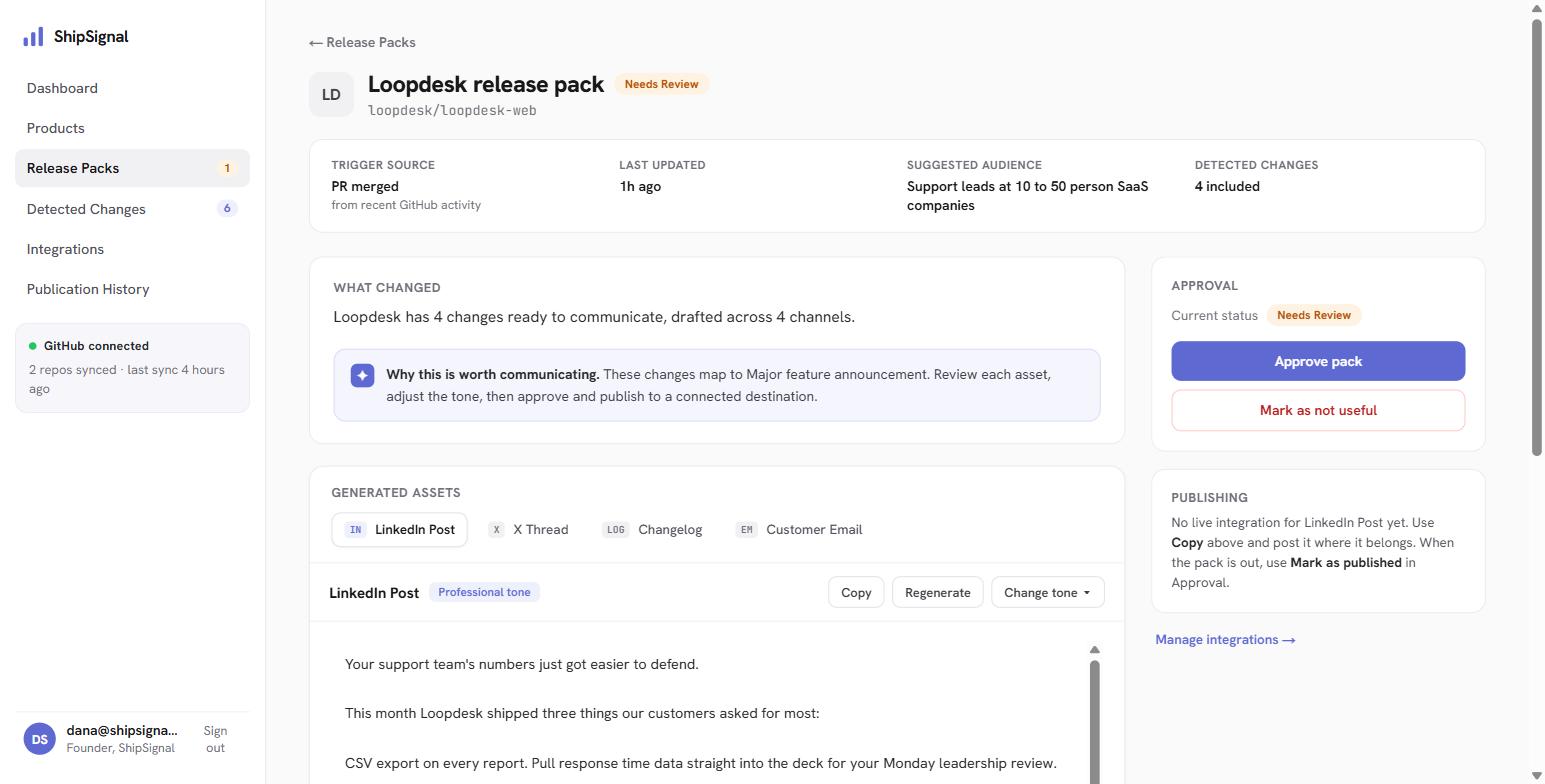
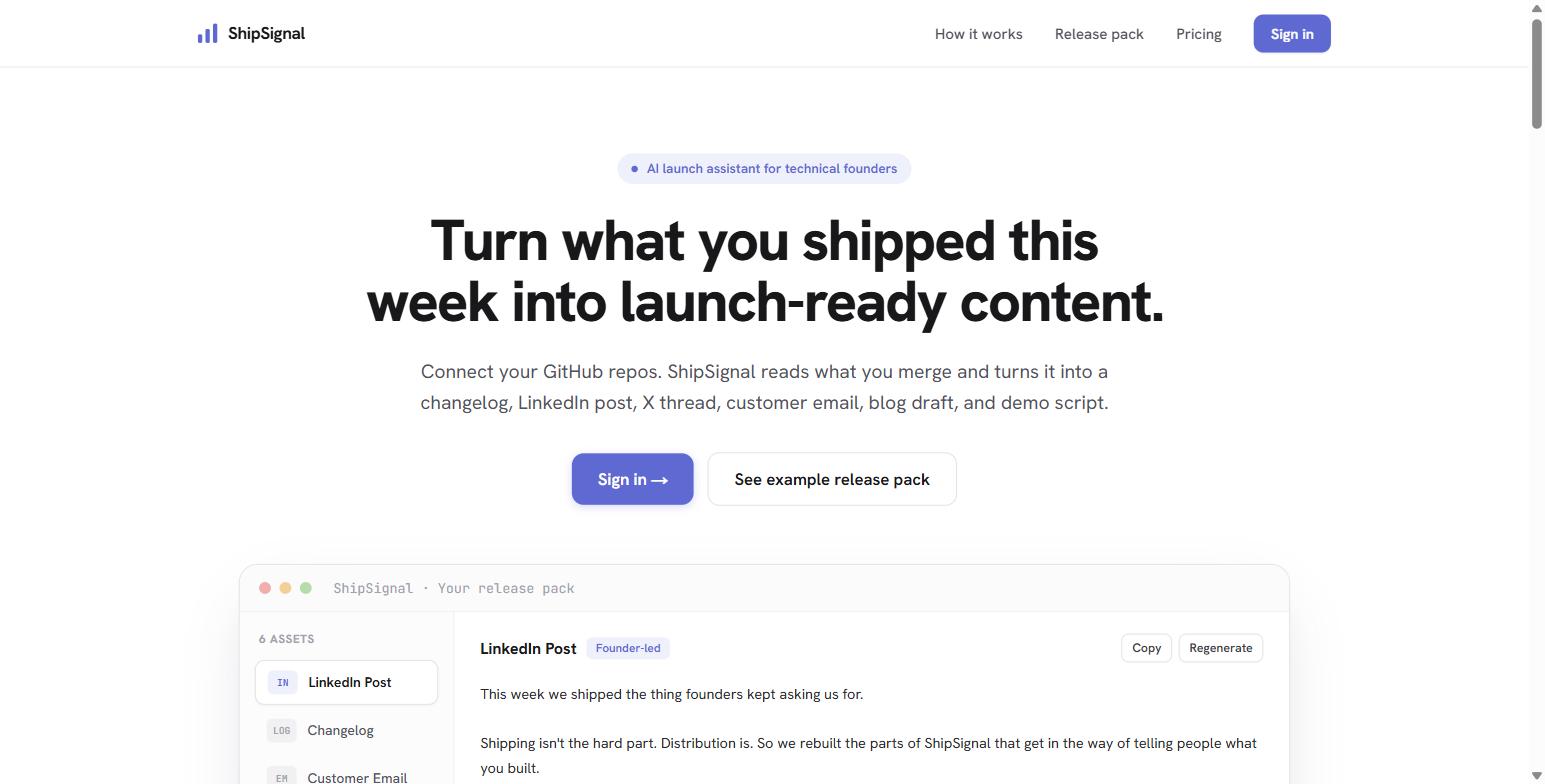
Plug in a GitHub repo and every product update your team ships becomes ready-to-publish marketing content. ShipSignal drafts the changelog, LinkedIn post, X thread and customer email for each update, in the product's own voice, ready to review and post.

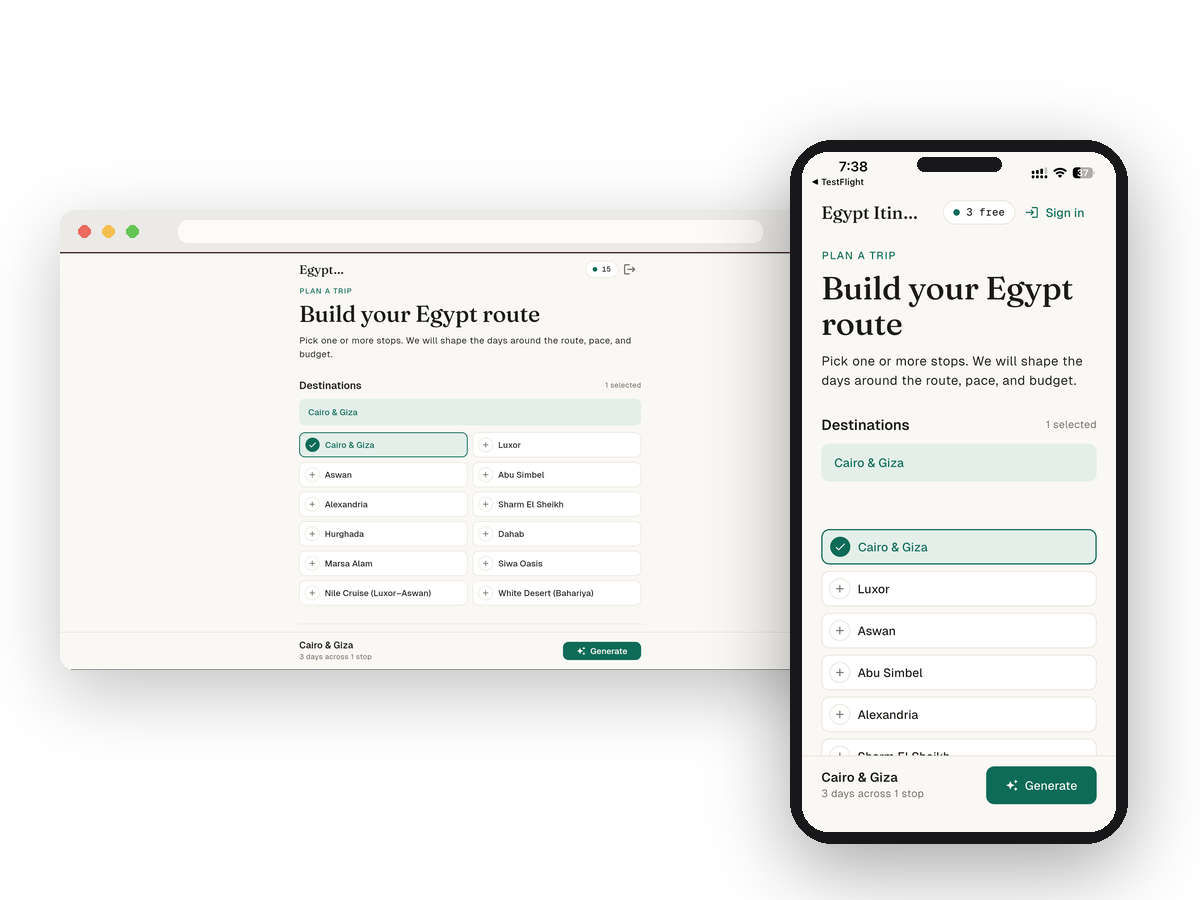
Tell it where you're going and it writes the trip. Every new user gets free generation credits; when they run out, Stripe checkout tops them back up, a full freemium loop wired end to end.
Hire me for
Product Management
Roadmaps, specs, and the hard prioritisation calls. I've run a support product for 5M+ monthly actives and led engineering and design to ship it.
Build & Prototype
I'm an engineer, so specs turn into working software. Mobile apps, AI features, and payment flows shipped to real stores.
Strategy & Research
Bain-trained problem structuring. Market sizing, business cases, investment memos and decision frameworks that survive a board room.
Where I've worked





Computer Engineering,
with a business minor

The American University in Cairo
BSc Computer Engineering, Entrepreneurship minor

University of North Carolina at Chapel Hill
Semester abroad
Competitive by
default
First Place · Case & Startup Competitions
Prizes in 7 of 10 competitions entered in senior year.
Silver Medal · World Indoor Rowing Championships
Rowing athlete. The discipline transfers.

I sit between the spreadsheet and the codebase.
Most people pick a side. I trained as a computer engineer, then spent my career on the business side: venture capital, strategy consulting, and product management at one of the region's largest e-commerce platforms.
That combination is the whole pitch. I can size a market on Monday and ship the feature on Thursday. When I say something is buildable, it's because I've built it: Egypt+ is live on iOS and Android.
Let's build the thing.
Product strategy, mobile builds, AI features, or a second brain on a hard decision. Tell me what you're working on.
Egypt+
A gamified travel companion for Egypt. Designed, built and shipped solo, from Supabase schema to App Store listing.
& engineer
Android
audio tours
paid tours
Egypt has the world's best content and the worst tooling for it.
Visitors arrive with a bucket list of three sites, see them, and leave. The other twenty-one (Abu Simbel, Karnak, the Siwa oases) never make the itinerary, because nothing surfaces them at the moment a traveller is deciding what to do next. Guided tours solve this for people who book them; everyone else gets a static list and a bad audio guide rented at the gate.
The insight: travellers already have the device, the GPS and the free time. What they don't have is a reason to keep going.
A progress bar for a country.
GPS Check-ins
Get within 2 km of a site and you can check in. Location-gated so the reward means something.
Rarity Badges
Common, rare and legendary tiers. Remote sites are worth more, which is exactly the behaviour I wanted to push.
Narrated Audio Tours
The paid layer. Unlock once, listen forever: a one-time purchase per site rather than a subscription nobody wants on a two-week trip.
Quests, Bingo & Ranks
Trivia and photo quests award XP; an Egypt Bingo card frames the whole country as one board; a monthly leaderboard keeps returning explorers honest.
Boring stack, shipped fast.
The whole loop, not a slice of it.
Egypt+ covers everything a small product needs: a monetisation model that fits the user's context, a retention mechanic that isn't a push notification, a real database schema, store review, and a brand system consistent enough that this portfolio is built from it. That's the range I bring to freelance work.